
Why Coal Dust Destroys Impact Crushers?Many people want to know this.Coal crushing sounds simple until you've actually run a crushing plant during the dry season. Coal itself isn't very hard; the real enemy is invisible—coal dust.
Why Coal Dust Destroys Impact Crushers?
Coal ash is conductive. When it enters the electrical system, it doesn't just sit there. It bridges circuits, creates leakage paths, and eventually leads to short circuits. The consequence is unplanned downtime—in severe cases, downtime every 30 minutes.
This is precisely the problem the SUHMAN impact crusher engineering team aimed to solve. Their solution wasn't a single function, but a three-layer protection system to keep the electrical system clean, cool, and continuously operating.
The Real Cost of Coal 。When an impact crusher processes coal, the high-speed rotating plates and hammers generate a strong airflow within the crushing chamber. This airflow carries fine coal dust outwards—if the equipment's sealing design doesn't account for this, the dust can enter the electrical control cabinet.
The consequences are cascading: Short circuits. Conductive coal dust accumulates on busbars, contactors, and PLC modules. Even a thin layer is enough to create a conductive path where it shouldn't be.
Overheating. Coal dust covers heat sinks and cooling fins, reducing heat dissipation efficiency. Motor and drive operating temperatures rise, insulation aging accelerates, and components fail prematurely.
Sensor drift. Proximity sensors, temperature probes, and vibration monitors become unreliable after being covered in conductive coal dust. Control systems begin making decisions based on erroneous data.
Unplanned downtime. The most costly consequence. Short circuits don't just stop machines—they can burn out expensive components like inverters and PLCs. In severe cases, the factory has to shut down, clean, and restart every 30 minutes, in a recurring cycle.
For coal processing lines, a 30-minute downtime is more than just inconvenient. It makes the entire production line unpredictable. Downstream screening, conveying, and stacking systems are all affected by this instability.
SUHMAN's Three-Layer Protection System
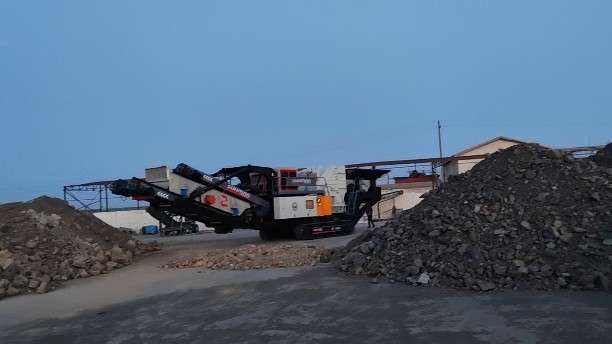
SUHMAN addresses this problem as a systems engineering solution, not a single component. The solution is divided into three layers, each targeting a different failure mode.
First Layer: Fully Enclosed Electrical Enclosure
The electrical control cabinet of the SUHMAN SF series impact crusher is housed in a fully enclosed enclosure. This is not just a simple metal box—it's a designed, sealed enclosure that prevents unfiltered air from exchanging with the outside environment.
The enclosure cuts off the most common intrusion path for coal dust: direct exposure. Traditional open or partially enclosed electrical cabinets allow dusty air to flow freely through the cabinet. The fully enclosed enclosure completely cuts off this path.
Second Layer: Negative Pressure Ventilation System
A fully enclosed enclosure itself presents a new problem: heat buildup. SUHMAN solves this with a negative pressure ventilation system.
How it works: A dedicated exhaust fan continuously draws air out of the electrical enclosure.
A slight negative pressure is created inside the enclosure—meaning air can only flow inward through any tiny gaps, not outward.
Since the only incoming air is filtered intake air, coal dust cannot penetrate through seals or seams.
The continuous airflow simultaneously removes heat, maintaining a stable internal temperature.
The negative pressure solution may seem counterintuitive, but it is highly effective. Instead of trying to perfectly seal every gap (which is nearly impossible on vibrating, moving equipment), it's better to ensure safe airflow in any direction: filtered air in, clean air out.
Third Stage: Two-Stage Air Filtration – Dry Filter First, Oil Filter Later
Even with a fully enclosed enclosure and negative pressure, the intake air still needs filtration. SUHMAN employs a two-stage filtration system:
First Stage – Dry Filter: The first stage is a dry particulate filter, intercepting most coal dust and larger particles. This protects downstream filter elements and extends overall lifespan. Dry filters are also easy to inspect and replace in the field.
Second Stage – Oil Bath Filter: After the dry filter, air enters the oil bath filter. The oil captures any residual particles missed by the dry filter – including submicron dust that may still be conductive. Oil bath filters are particularly effective at capturing conductive particles because the dust is locked in the oil, rather than accumulating on dry surfaces and creating a hazard.
This two-stage approach is a key differentiator. Most manufacturers use only a single dry filter – which is either prone to clogging (when filtration accuracy is high) or leaks too much (when filtration accuracy is low). The combination of dry filtration and oil bath achieves both high capture efficiency and long maintenance intervals.
Results: From 30 Minutes to Months
Comparative data from SUHMAN coal crushing applications is very telling:
Before Modification – Traditional Impact Crusher, Standard Electrical Cabinet:
Electrical failures every 20–30 minutes in coal dust environment
Frequent cleaning and component replacement
Uncontrollable production schedules
High maintenance labor costs
After Modification – SUHMAN SF Series Impact Crusher, Three-Layer Electrical Protection:
Months of stable operation with no electrical-related downtime
No conductive coal dust accumulation in the electrical cabinet
Predictable production schedules
Significantly reduced maintenance costs
This is not a marginal improvement. It's the difference between "being able to plan production around it" and "the equipment deciding when to stop."
Why this is crucial for coal processing
Coal is not the hardest material to crush, but it is one of the most environmentally demanding. Conductive coal dust affects not only the crusher itself but also the entire plant's electrical ecosystem—control cabinets, motor starters, frequency converters, and PLC systems.
SUHMAN's approach addresses the problem at its root (conductive coal dust intrusion), rather than merely treating the symptoms (frequent cleaning and component replacement). The three-layer protection system—a fully enclosed enclosure + negative pressure + two-stage filtration—is effective because each layer compensates for the limitations of the others: The fully enclosed enclosure blocks direct exposure; negative pressure ensures safe airflow even through micro-gaps; and two-stage filtration guarantees sufficiently clean incoming air. Removing any one layer diminishes the system's effectiveness. These three elements work together to form a reliable defense.
SUHMAN Impact Crusher for Coal Crushing
The following SUHMAN impact crusher models are particularly suitable for coal processing applications:
| Model | Type | Capacity | Core Features |
| SF-380D | Mobile Impact Crusher | Medium Capacity(220-300) | Triple Electrical Protection |
| SF-580D | Large Mobile Impact Crusher | High Capacity(>300) | Enhanced Sealing and Filtration |
| SF-580D-S | Integrated Crusher and Screener | Integrated | Integrated Pre-screening |
| SF-J380D | Modular Impact Crusher | Fixed Type | Fixed Installation Version |
All SUHMAN impact crushers come standard with a three-layer electrical protection system, making them a reliable choice for coal processing, construction waste recycling, and medium-hard rock crushing.
Contact Us
Want to know which impact crusher model and configuration is suitable for your coal processing project?
Phone/WhatsApp: +86 13655550150
Email: chinadainamu@gmail.com / suhmanhf@gmail.com