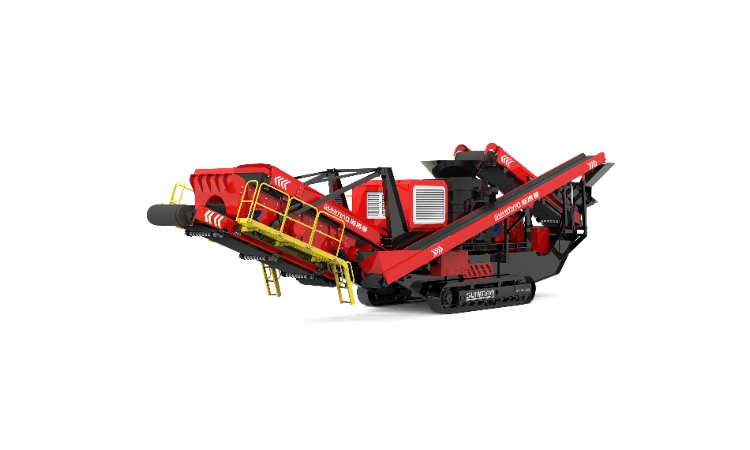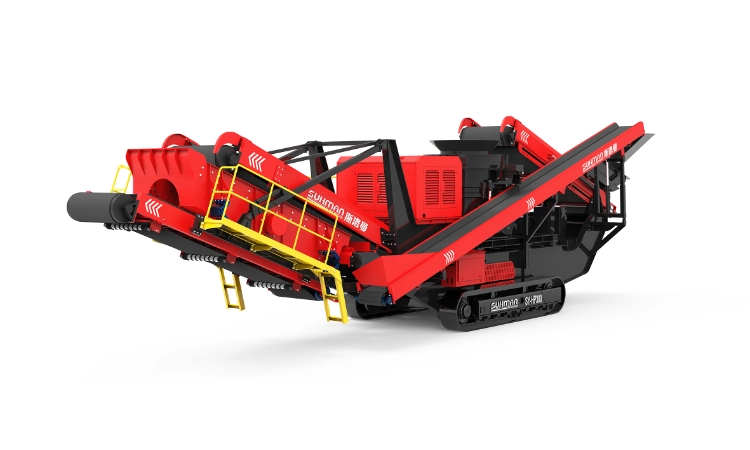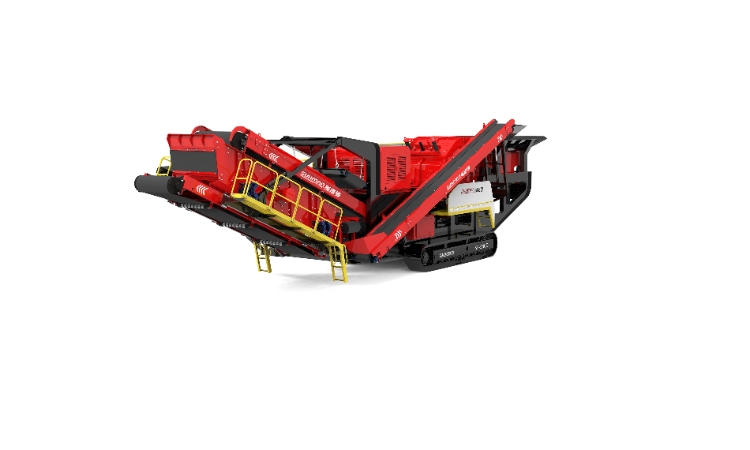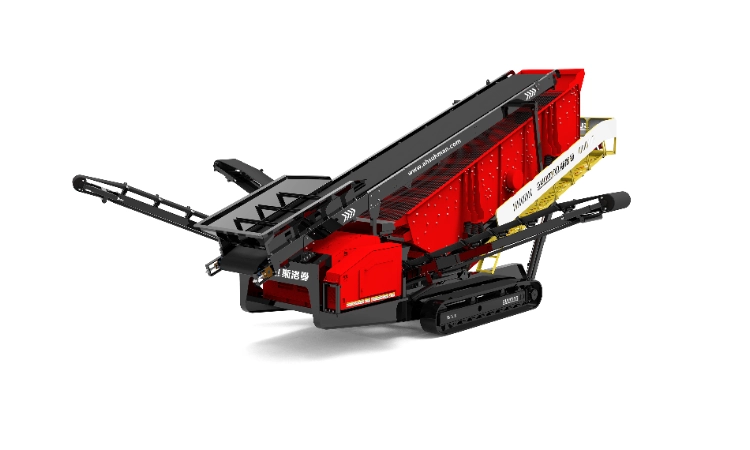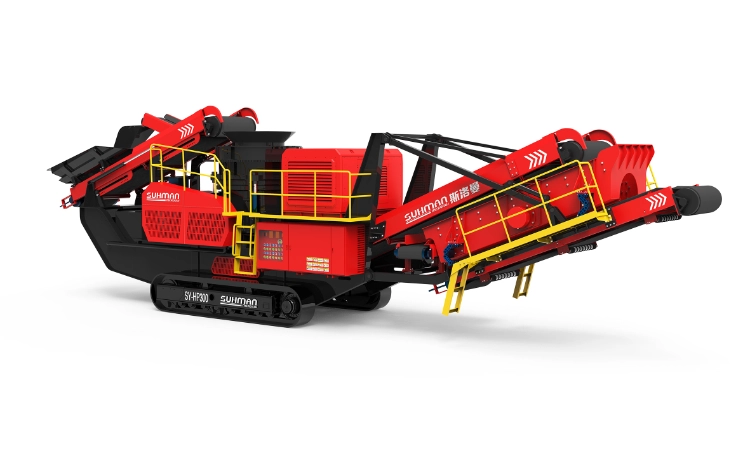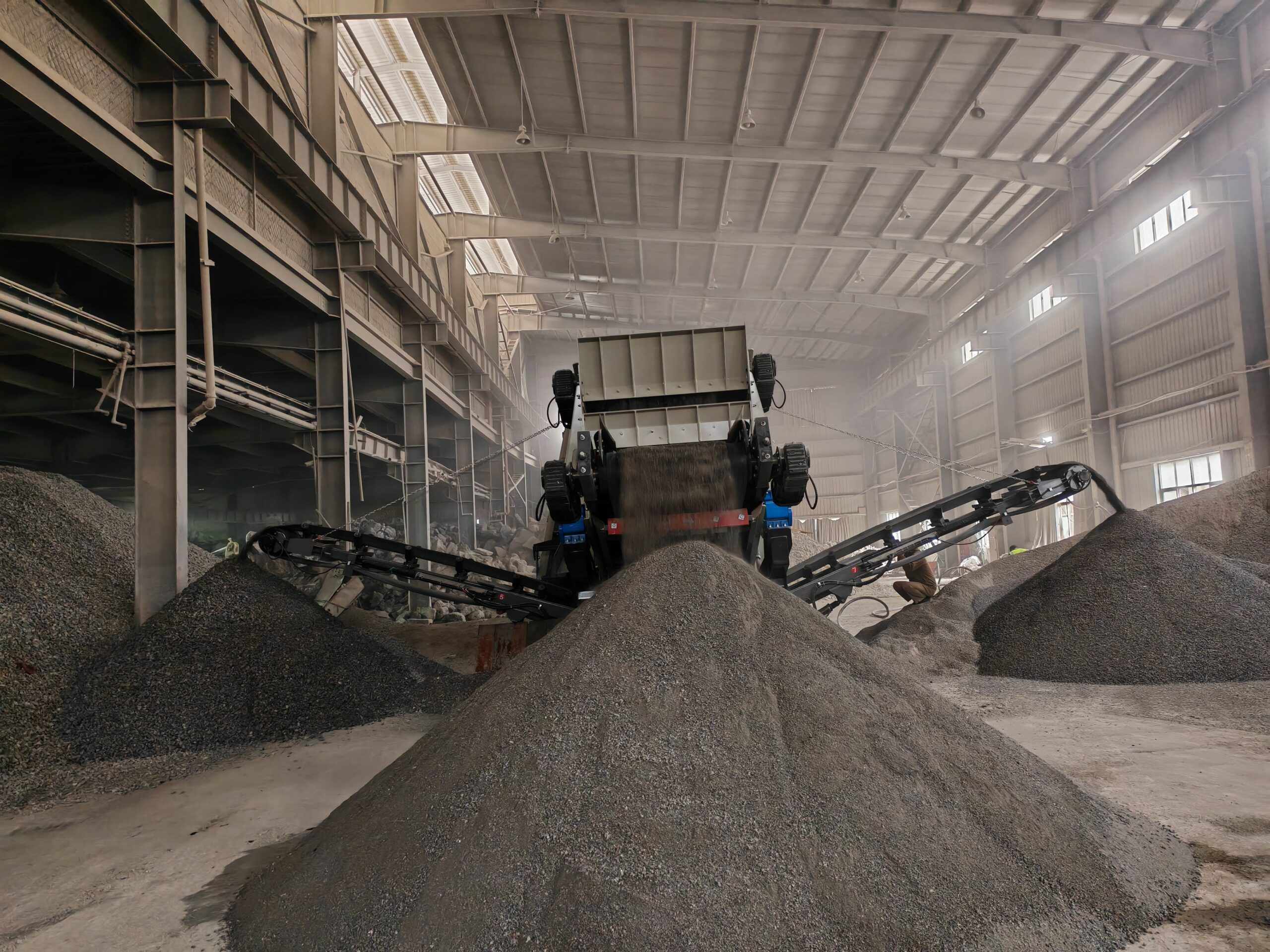
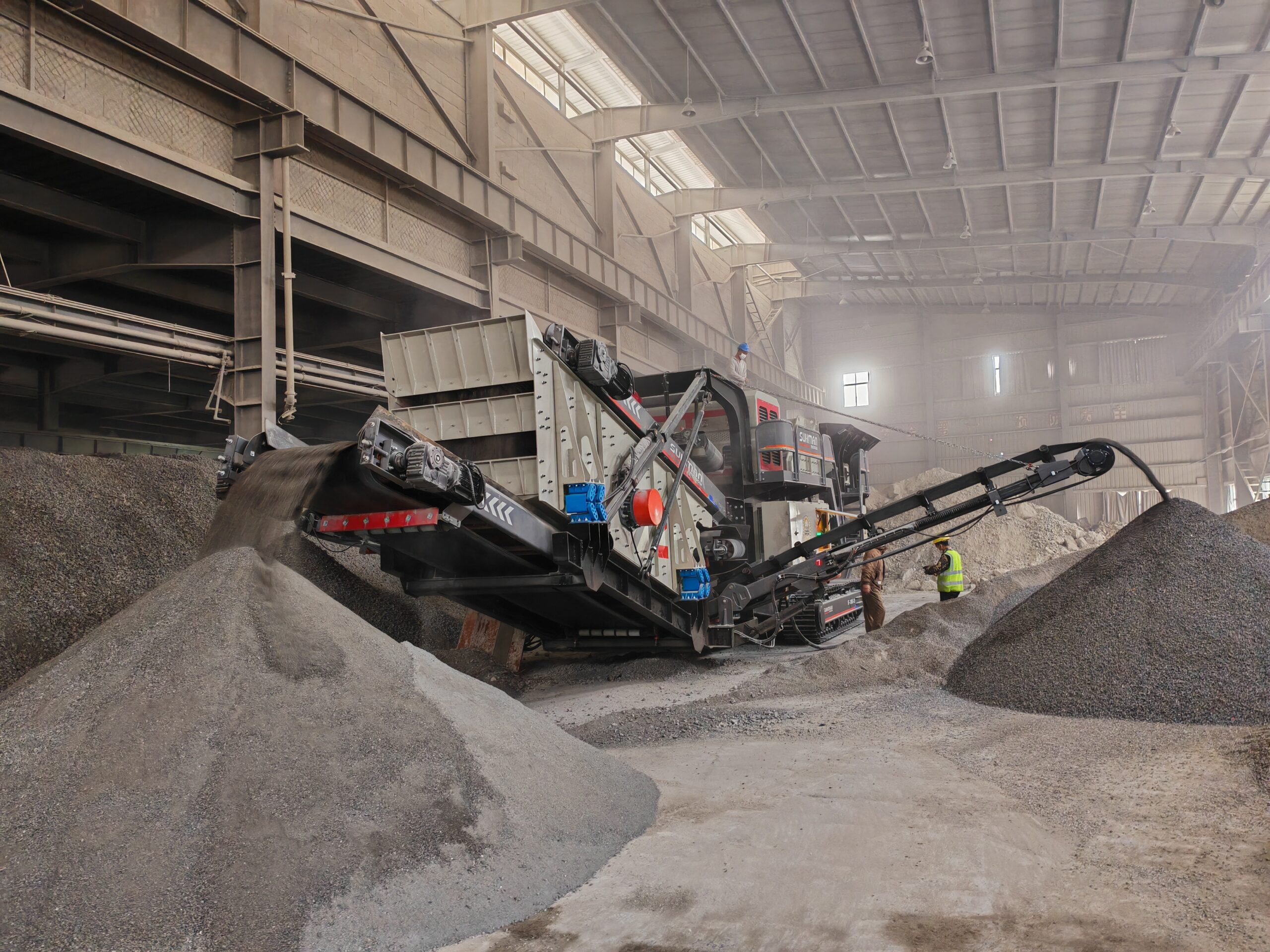
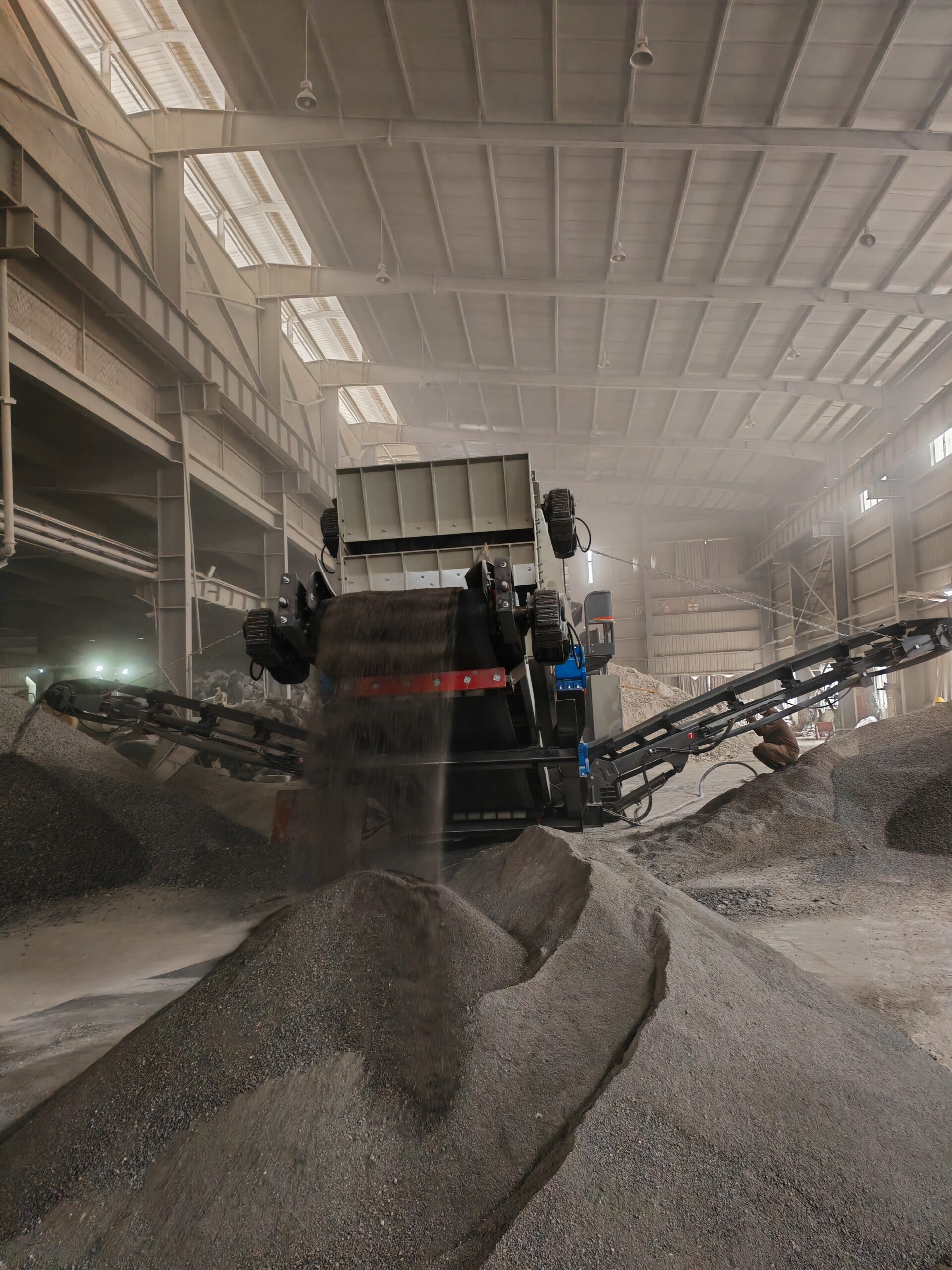
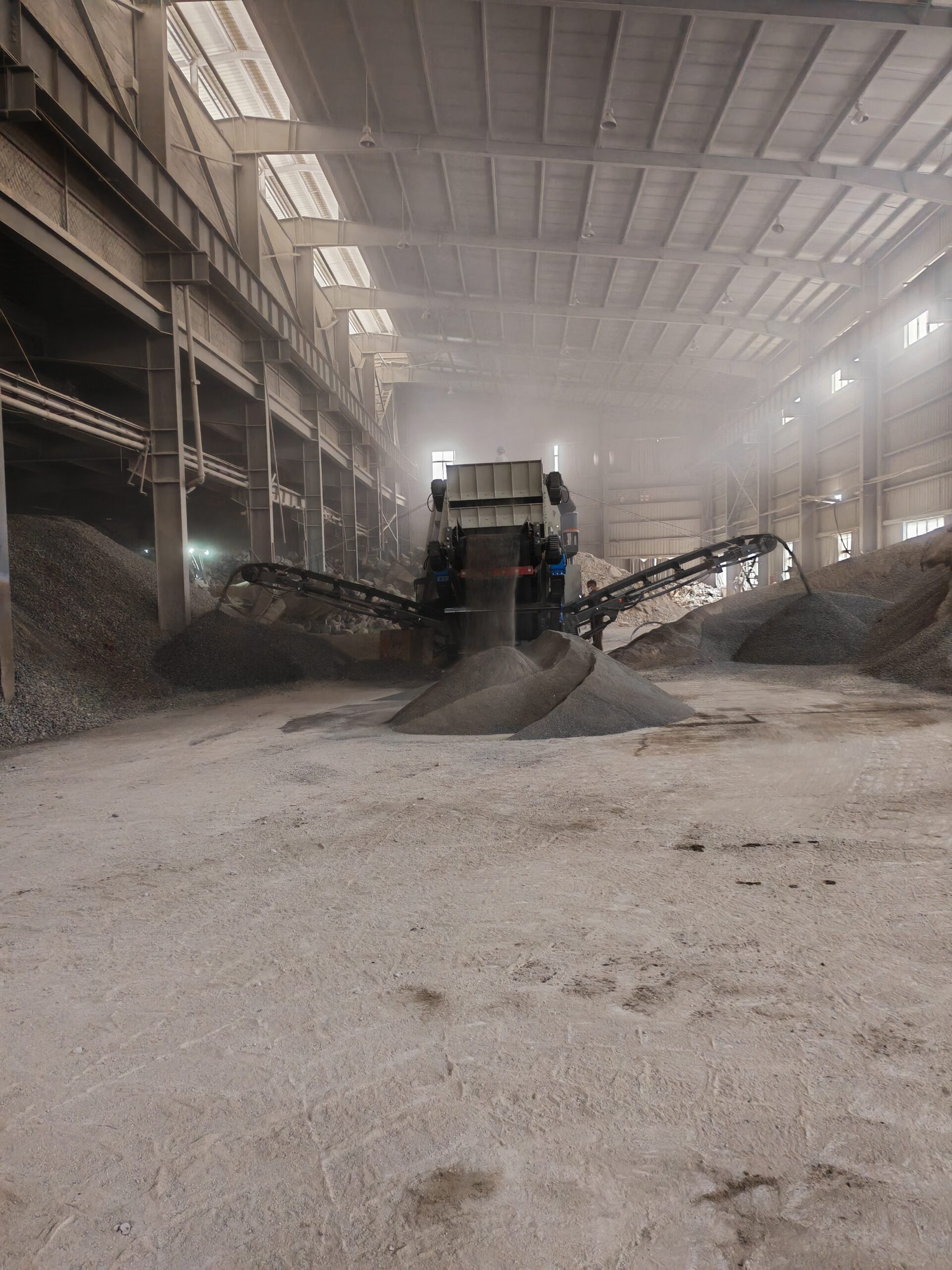
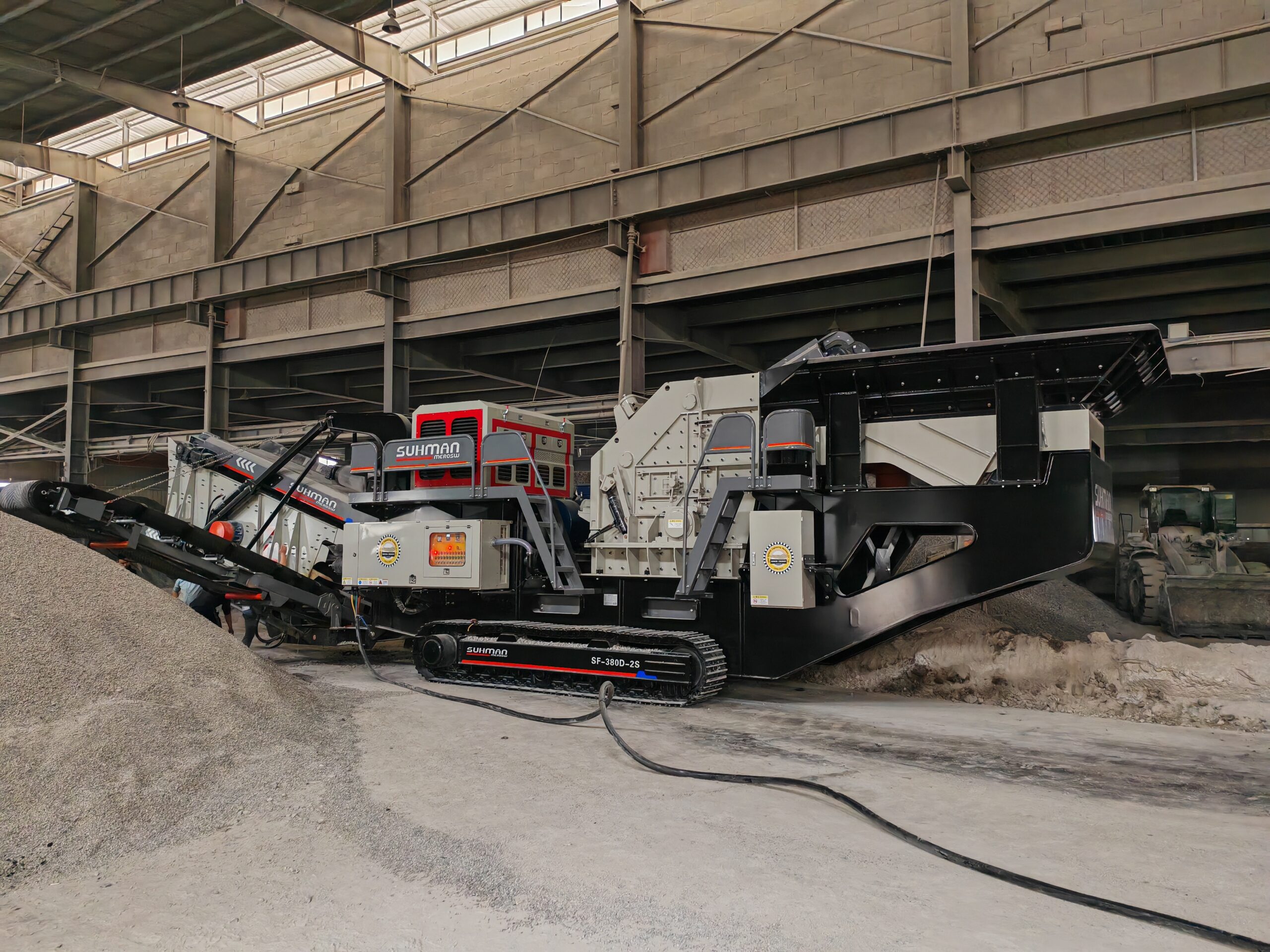
In March, the sea breeze along the eastern coast of Zhejiang Province carried a slight dampness. At a construction aggregate production site in Taizhou, Zhejiang, a tracked mobile crushing and screening machine had just been installed and commissioned, and went into production that same day. A loader fed large stones into the inlet; after crushing and screening, three discharge belts continuously output three specifications of finished materials—0-6 mm manufactured sand, 6-13 mm small stones, and 13-34 mm large stones.
Please click to view the video.
From equipment arrival at the factory, relocation, to official production, the entire process took only one day. Now, this equipment has been running stably for several months, with a stable hourly output of around 180 tons, producing nearly 2,000 tons of finished aggregate for the customer daily.
I. What do customers value most when purchasing equipment?
This project began six months ago.
The customer, Mr. Zhang, has been deeply involved in the construction aggregate industry for many years and has stable sales channels in Taizhou. Before purchasing the equipment, Mr. Zhang contacted no fewer than five manufacturers from Henan, Shandong, and Jiangsu provinces, each providing solutions and quotes.
"To be honest, I was overwhelmed by all the offers," Mr. Zhang told us. "Everyone claimed to be the best, the specifications were similar, but the prices varied significantly. The cheapest was over 300,000 yuan cheaper than the one we ultimately chose, while the most expensive was over 500,000 yuan more expensive."
Mr. Zhang didn't rush into a decision. Instead, he visited two sites where similar equipment was already in operation to observe its performance. This visit revealed the key differences.
"One piece of equipment looked fine, but after six months, the main frame cracked. The manufacturer said it was an operational problem, but anyone with a discerning eye could see it was because the steel was too thin and couldn't withstand long-term vibration." "Another piece of equipment had its capacity falsely advertised; it claimed 200 tons per hour, but in reality, it only produced a little over 150 tons, and its power consumption was extremely high." "The most troublesome issue was one piece of equipment that had difficulty starting in winter; the hydraulic oil froze, and it took two hours before it could work."
After seeing these sites, Mr. Zhang had a clear understanding: when buying equipment, you can't just look at the price and specifications; you have to look at the materials used and the long-term stability.
II. What are the differences between the same integrated crushing and screening machine?
At our first meeting, Mr. Zhang asked us several questions, all about differences he had observed when comparing with competitors.
"What is your main unit model?"
We answered truthfully: PF-1214 impact crusher main unit.
Mr. Zhang nodded: "I've looked at several companies, and most use the 1213. Your 1214 is a size larger."
This is indeed our advantage. Compared to the 1213, the 1214 main unit has a larger rotor diameter and a deeper crushing chamber, increasing production capacity by approximately 15% to 20% at the same power. More importantly, the 1214 main unit has a higher hammer utilization rate, maintaining good crushing performance even after wear, and extending its service life by about 30%.
For a customer producing 2000 tons of aggregate per day, what does a larger main unit mean? It means higher production capacity in the same working time; lower equipment load and lower failure rate for the same output.
"What kind of steel is used for the equipment frame? What is the thickness?"
We told Mr. Zhang: The main frame of the equipment is made of high-chromium alloy steel, with a thickness of 2 cm (20 mm).
Mr. Zhang was somewhat surprised: "The few companies I looked at before mostly used 1.4 cm, one even said they used 1.6 cm, but yours is 2 cm, which is significantly thicker."
This 0.6 cm difference may seem small, but it has a profound impact. Mobile crushing equipment operates in a high-vibration, high-impact environment for extended periods, and the frame thickness directly determines the equipment's lifespan and stability.
The advantages of 2 cm high-chromium steel are:
Stronger vibration resistance, less prone to cracking during long-term operation
Better impact resistance, preventing deformation under impact from large stones
High-chromium material is heat and cold resistant, operating normally in temperatures ranging from -20°C to 60°C
Excellent corrosion resistance, less prone to rusting even in the high-salt environment of coastal areas
Mr. Zhang later told us, "Summers in Taizhou are very hot; the surface temperature of the equipment can reach 60-70 degrees Celsius under direct sunlight; in winter, it sometimes drops below zero. I'm very concerned about the steel's ability to withstand that."
"How much does the equipment weigh?"
We told Mr. Zhang: The entire machine weighs 56 tons.
This weight is considered "heavyweight" among similar equipment. Some manufacturers make their equipment lighter to reduce transportation costs, but at the cost of stability. A weight of 56 tons means the equipment operates more stably with less vibration, and the foundation requirements are actually lower.
"How long after relocation can we start production?"
Our promise to Mr. Zhang was: after the equipment arrives at the factory, relocation, commissioning, and production will be completed on the same day.
Mr. Zhang was somewhat skeptical: "One manufacturer said three days, but it actually took a week. Can you really get it done on the same day?"
Facts proved our promise. The equipment arrived at the Taizhou site in mid-March, and our after-sales service team arrived in advance to assist with site preparation. The equipment arrived at the factory on the same day, the tracks self-positioned, pipelines were connected, electrical checks were performed, no-load testing was conducted, and commissioning with materials was completed seamlessly. Production officially started that evening, and the first truckload of finished materials was successfully loaded.
Mr. Zhang, observing the equipment operation on-site, remarked, "I truly didn't expect it to go into production on the same day."
III. Demand Matching: We Confirmed Each Item
Of course, hardware advantages are only the foundation; what truly impressed the client was the understanding of their needs.
Regarding materials, the main component is limestone, with occasional amounts of bluestone. The hardness isn't high, but some materials have a layer of mud on their surface. The maximum raw material size is approximately 450 mm, requiring minimal pre-screening.
Regarding finished products, the requirements are clear—three specifications. 0-6 mm manufactured sand is used for mortar, 6-13 mm small stones for fine aggregate concrete, and 13-34 mm large stones for the main structure. The ratio of these three materials is approximately 3:3:4, with the largest demand for large stones.
Regarding production capacity, the customer calculated: "I supply several ready-mix concrete plants, requiring approximately 1500 to 1800 tons of material daily. If they work 10 hours a day, the hourly output needs to be at least 180 tons."
Regarding relocation, it's anticipated that the plant will need to be moved every two to three months, with the furthest transport distance being approximately 300-400 kilometers. "Therefore, the equipment needs to be relocated quickly, and disassembly and assembly shouldn't be too complex."
In terms of environmental protection, the production site isn't too far from the village, so dust and noise levels need to be well controlled; otherwise, complaints from villagers will be a problem.
By noting down these requirements one by one, the technical team had a clear understanding of the situation. The customer didn't need a machine with "impressive specifications," but rather a machine that could truly solve their problems.
IV. Core Configurations: All for Practicality
The core configurations of the SF-380D-2S are all practical, without any unnecessary frills.
The PF-1214 impact crusher main unit is the core of the core. The rotor has a diameter of 1250 mm and a length of 1400 mm, equipped with high-chromium alloy hammers for excellent wear resistance. The optimized crushing chamber design allows for combined "stone-on-stone" and "stone-on-iron" crushing of materials, resulting in full-bodied finished products with less than 5% needle-like and flaky particles. Compared to the 1213 main unit, the 1214 has a larger feed opening, enabling it to process larger stones and significantly increasing production capacity.
A 2 cm thick high-chromium steel frame forms the equipment's "skeleton." Employing an integral welding process and reinforced key areas, its vibration and impact resistance far exceeds industry standards. The high-chromium material is heat and cold resistant, ensuring stable operation in both high summer temperatures and harsh northern winters. It is also resistant to corrosion in the high-salt environments of coastal areas, significantly extending the equipment's service life.
The three-layer vibrating screen has a screen area of 12 square meters, with three screen meshes of 34 mm, 13 mm, and 6 mm, corresponding to three different finished product specifications. The screen features a quick-change design, requiring only half an hour for one person to replace. It boasts high screening efficiency, with a reasonable mix of three finished product grades, receiving excellent feedback from commercial concrete plants.
The tracked chassis utilizes a heavy-duty design with hydraulic drive, allowing the equipment to move independently. The entire machine weighs 56 tons and can be transported on flatbed trucks during relocation, meeting road transport requirements. The large track contact area reduces site pressure, ensuring stable operation even on soft soil foundations.
The main motor has a power of 400 kW and features soft-start control, minimizing impact on the power grid. Actual energy consumption is approximately 10% lower than similar equipment.
The dust suppression system incorporates spray devices at key dust-generating points such as the feed inlet, crushing chamber, and discharge outlet, effectively suppressing dust dispersion. Customers have found this system very practical; previously, villagers complained about dust, but these complaints have largely subsided.
The intelligent electrical control cabinet is equipped with a PLC and a 10-inch touchscreen, allowing operation of start/stop, speed adjustment, and fault diagnosis via the screen. An optional 4G module is also available, enabling monitoring of equipment operation via mobile phone when not on-site. None of these configurations are superfluous. The customer later told us, "You didn't overload me with features, which is great. Some manufacturers try to cram every function into your device, driving up the price, but many functions are simply unnecessary."
V. Same-Day Production: Time is Money
In mid-March, the equipment arrived at the Taizhou site. The after-sales service team arrived a day early to assist the customer with site preparation.
The integrated crushing and screening machine has very low foundation requirements; only a leveled and compacted site is needed, unlike fixed production lines which require concrete foundations. This is a major advantage of mobile equipment—fast deployment, quick relocation, and no production delays.
On the day the equipment arrived, the service engineer directed the tracks to position themselves, adjusted the equipment's level, connected pipelines, and checked the electrical system. Mechanical work was completed in the morning, and electrical debugging was conducted in the afternoon.
No-load and material-load tests were completed seamlessly. The load was gradually increased from low to full, and indicators such as production capacity, finished product quality, and energy consumption were observed. After everything was normal, production officially commenced.
As evening fell, the first truckload of finished materials was loaded and shipped out. The customer grabbed a handful of stones, examined them, and nodded: "The particle size and shape are good; the ready-mixed concrete plant should be satisfied."
From the equipment arriving at the factory to official production, the entire process took less than 10 hours. The customer said, "Another manufacturer said it would take three days, but it actually took a week. I really didn't expect you to start production on the same day. Time is money; the sooner we start production, the sooner we can make money."
VI. Operational Feedback: We Listen to the Real Insights
After the equipment had been running for a period of time, we followed up with the customer. We didn't give them advance notice because we wanted to hear their most honest feedback.
"Regarding production capacity, the actual output during operation is 175 to 185 tons, which is about what you mentioned. I work 10 to 11 hours a day, with a daily output of around 1800 tons, which is enough for several commercial concrete plants."
"Regarding finished product quality, the gradation of the three types of aggregates is quite reasonable. The commercial concrete plants reported that the workability of the concrete is good, especially the 6-13 mm small aggregate, which is used in the largest quantity, and they are very satisfied. The particle shape of the aggregate from the 1214 main unit is indeed good, with few needle-like or flaky particles."
"Regarding energy consumption, I had someone keep track of the costs, and the electricity consumption is about 7 to 8 kWh per ton of material. The previous fixed line consumed about 10 kWh, so this saves us over 100,000 yuan in electricity costs per year."
"Regarding equipment stability, there haven't been any major problems in the past few months of operation. The frame is indeed sturdy, and the vibration is much less than the previous machine. Once, it ran continuously for 12…" "The equipment is still very stable after 24 hours."
"Regarding relocation, I just did one last month. Disassembling, loading, transporting, and resuming production took two and a half days. For a fixed line, it would take at least half a month and incur significant disassembly and reassembly costs."
"In terms of after-sales service, the engineers were on-site throughout the commissioning period, and the training was very detailed. Now, if there are any problems, we can get a response within two hours of calling. Once, when the screen got clogged, they provided video guidance on how to handle it, and it was resolved quickly."
The customer paused, then added, "If I had any suggestions, it would be to expedite the supply of spare parts. Once, the hammer plate wore out, and we had to wait several days for the order, which affected production capacity. Of course, this was also my fault for not stocking up in advance."
We noted this suggestion. Later, we communicated with the customer and helped him create a list of commonly used spare parts, suggesting he keep some spare parts on hand to reduce downtime.
VII. The Customer's Calculations Are Very Clear
At the end of the conversation, the customer did some calculations with us.
"I spent less than 2 million yuan on this equipment. If I had built a fixed production line, the same capacity would have required at least 3 million yuan, plus foundation work, scaffolding, and other miscellaneous expenses, totaling 4 million yuan."
"Relocation costs: dismantling a fixed line costs 50,000 to 60,000 yuan each time, not including transportation and reinstallation. With this integrated machine, relocation only costs a little over 10,000 yuan."
"In terms of energy consumption, I save over 100,000 yuan in electricity bills annually. Regarding labor, a fixed line requires four or five people, while this equipment only needs two, saving another 100,000 yuan in wages annually."
"Most importantly, I can now take on temporary projects. Before, I was hesitant, afraid I wouldn't be able to dispose of the equipment after the project ended. Now that the equipment can move with the project, I have the confidence to take on temporary projects. Last year, I took on two road repair projects, and those two alone earned me hundreds of thousands more than normal material suppliers."
"And regarding equipment quality, a 2cm frame is definitely more robust than a 1.4cm frame, 1214…" The main unit also has high capacity. Spending a little more money on a good piece of equipment will ensure it lasts for eight to ten years, making it more cost-effective in the long run.
The customer understands this very well. Equipment investment isn't about the price, but about whether it will help the customer make money.
VIII. Some advice for those currently selecting equipment
If you are considering purchasing mobile crushing and screening equipment, ask yourself these questions first:
What is my raw material? What is its hardness? What is the maximum size? How many types of finished products do I need? What are their specifications? What is the required capacity? Hourly or daily output? Do I need to relocate frequently? What is the approximate transportation distance? What are the limitations of my site? How stringent are the environmental requirements? What is the thickness of the equipment frame? What is the main unit model? Can the equipment adapt to the local climate?
Thinking through these questions before communicating with the manufacturer will allow you to find the right equipment for you more efficiently.
Additionally, I suggest visiting one or two sites where similar equipment is being used and asking actual users about their experience. Specifications may look impressive, but actual operating results don't lie.
IX. In Conclusion
Near the end of the interview, the client said something that left a deep impression on us.
"Buying equipment isn't just a one-time purchase; it's something you'll use for many years. If manufacturers only care about selling and not after-sales service, customers will be disappointed. I'm willing to cooperate long-term with manufacturers that offer good equipment and good service."
We kept this in mind.
From solution consultation to equipment selection, from installation and commissioning to after-sales maintenance, we provide full support. The problems our clients encounter are our problems; their success is our success.
If you would like to learn more, please contact us.
Hotline: +86 15385175652
Email: 70989544@qq.com
Production Base: No. 43 Tangkou Road, Feixi Economic Development Zone, Hefei City, Anhui Province
Whether the equipment is good or not, our customers who have used it speak for themselves. If you would like to learn more about this equipment, we can arrange for you to visit a nearby production site to see how it actually operates.